
By: Adwaieet Bhide, Yuki Li, Kelly Ufford, Howard Zhang, Xiru Zhang
This study provides a comprehensive analysis of AI integration in live operations, in-game commerce, and player analytics. The research reveals the urgent need for gaming companies to navigate accelerated AI adoption and evolving player expectations for personalized experiences. The goal is to identify the most impactful AI applications over the next three years and strategies that maximize engagement and monetization while maintaining player trust. Significant to this goal is balancing innovation with ethical considerations, including data privacy and transparency, while recognizing AI's potential to enhance storytelling and create immersive experiences. Employing a mixed-methods approach with industry interviews, a survey of over 1,000 U.S. gamers, and secondary research, Part I establishes the foundation for understanding AI's transformative impact - setting the stage for Part II's empirical findings and strategic recommendations. This research was conducted as part of the Master of Entertainment Industry Management program at Carnegie Mellon University in collaboration with our client, Scopely.
AI and the Future of Gaming
The rapid evolution of Artificial Intelligence (AI) is driving significant change in the video game industry. As AI adoption grows, industry leaders like Scopely, Inc. (Scopely) face both opportunities and challenges in enhancing player engagement, optimizing operations, and balancing monetization in gaming. This study examined how AI will affect the video game ecosystem over the next three years, particularly in live operations, in-game commerce, and player analytics. We examined AI’s influence on the player experience, Non-Player Character (NPC) behavior, and game development through nine industry interviews and a quantitative survey of 1,159 gamers based in the United States. Our study found that AI enhances personalization, automates in-game economies, and improves NPC interactions; however, it may also reduce social gameplay and lead to concerns about over-personalized monetization. Notably, 63.7% of players surveyed are unwilling to pay for AI-driven features, highlighting a key challenge for developers. We recommend using AI as a tool to enhance creativity when creating dynamic worlds and ensure transparency regarding the player experience. Game developers must align innovation with player expectations as AI evolves to build a sustainable gaming ecosystem.
AI Meets the Modern Game Industry
In an age where technology is at the forefront of entertainment, the video game industry is undergoing an era of change due to the rapid rise of AI. With over 3 billion players globally and annual revenues exceeding $187 billion, gaming is the most significant player in the entertainment industry (Buijsman, 2024). Furthermore, research from Gwertzman and Soslow (2022) indicated that generative AI will have the quickest impact on the gaming sector, as illustrated in Figure 1.
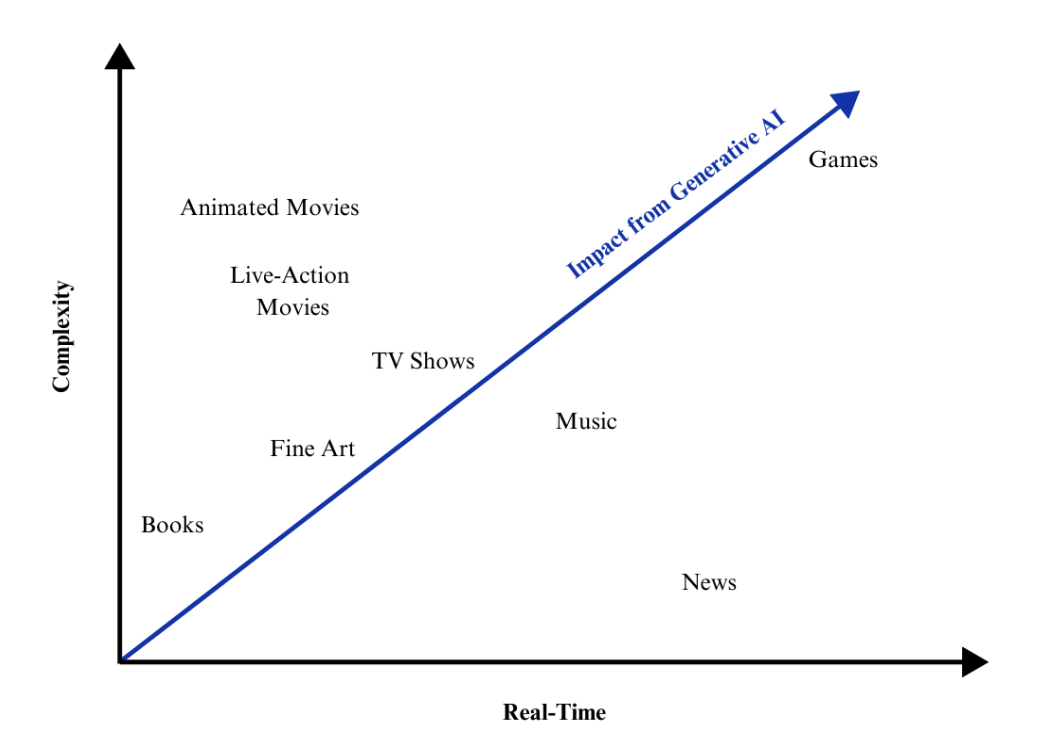
Figure 1: Impact of Generative AI Across Entertainment Sectors. Source: Andreessen Horowitz
Due to the complexity of assets involved in developing and maintaining a game, along with real-time updates after launch, generative AI presents ample opportunity to accelerate change. As AI technologies drive transformation across the industry, additional pathways may also arise to enhance the player’s experience and operational efficiencies for developers (Filipović, 2023).
The gaming industry is experiencing a shift in player expectations, with a growing demand for personalization and complex NPC interactions. By enabling dynamic procedural content generation, adaptive difficulty, and personalized gameplay, AI has the potential to elevate gameplay (Columbia University, n.d.). Operationally, AI supports real-time analytics, content moderation, and personalized in-game commerce, allowing developers to optimize player engagement and revenue streams. While AI excels at meeting these demands, its swift adoption raises several ethical issues, including data privacy, fairness, and transparency (Bonn, 2023). A strategic understanding of AI’s broader impact will be necessary for developers interested in integrating third-party AI solutions.
Why This Research Matters
AI is not only changing how games are made; it is enhancing the gaming experience. AI technologies are revolutionizing player experiences and community environments in gaming. In open-world games, AI-driven NPCs that adapt dynamically to player choices offer more immersive and personalized interactions. One example is the Nemesis System patent created by Monolith Productions, a Warner Bros. Games (WB Games) development studio. The Nemesis System generates unique NPCs that evolve based on player interactions by remembering past encounters, increasing in difficulty, and developing rivalries (Gach, 2025; Shepard, 2025).
Beyond gameplay, AI supports long-term operations by fostering healthier communities. For example, automated moderation tools efficiently detect harmful language, while anti-cheat systems like Valve’s Anti-Cheat (VAC) in Counter-Strike prevent unauthorized software use, ensuring fair play environments (Thomas, 2024). These applications improve player satisfaction and promote sustainable growth by extending game lifespans and attracting new players (Lark Editorial Team, 2024).
Additionally, AI technologies are crucial to the commercial value of the gaming industry by enhancing both development efficiency and financial outcomes. Internal studies from Electronic Arts, a leading game developer and publisher, indicated that 60% of development processes could benefit from AI, improving efficiency by 30%, while AI-powered personalized content could boost microtransaction revenue by 10-20% (Saksena, 2024). This research highlights AI’s potential to boost both player engagement and financial success, underlining its central role in the future of gaming.
The surge in online gaming during the COVID-19 pandemic further emphasizes AI’s emerging influence. For example, Steam, one of the largest gaming platforms globally, experienced a dramatic increase in concurrent users, doubling from 20 million to 40 million in five years (SteamDB, 2025). To manage this growth and enhance user experience, Steam leverages AI-driven systems like the Interactive Recommender, which uses machine learning to analyze player behavior and suggest personalized game recommendations (Steam News, 2020). Unlike traditional tag-based or review-driven systems, this AI model learns from actual playtime data and identifies patterns among millions of users to surface the games they will most likely enjoy (2020). Steam ensures that players can navigate its vast game library more efficiently, maintain high player engagement, create a balanced gaming environment, and cultivate a player-centric ecosystem by integrating AI into its recommendation engine.
The future of AI in gaming lies in its ability to enhance gameplay, foster healthier communities, and boost production efficiency and financial outcomes. Additionally, AI’s role in creating personalized experiences, ensuring fair play, and managing large-scale user bases is critical to the industry’s growth. However, concerns about AI’s impact are also rising. A recent report from GDC (2025) found that 30% of industry professionals now believe generative AI negatively affects gaming, citing issues such as intellectual property theft, content quality decline, and regulatory challenges. As AI evolves, it will keep shaping the future of gaming, and finding the right balance between innovation and ethical concerns will be crucial.
Before moving into the research, it is important to clarify terminology so that everyone reading this research has a shared understanding of the research findings and recommendations.
Definition of Terms
Below are the essential terms referenced throughout this study.
Artificial Intelligence (A.I.). The ability of a digital computer or computer-controlled robot to perform tasks commonly associated with intelligent beings, such as reasoning, decision-making, and learning (Stryker, 2024)
In-game Commerce. The buying and selling of in-game items, sometimes using real-world currency or digital credits (What Is an In-Game Economy, n.d.)
Live Operations (LiveOps). Adding new content, features, events, or activities to a game after its initial release (Live Game Operations, n.d.)
Non-Player Character (NPC). A character in a game that is computer-controlled with predetermined behaviors that can impact gameplay (IONOS Editorial Team, 2023)
Review of Literature
Research on AI in the gaming industry has primarily focused on three areas: (1) applications in content creation and community management, (2) commercial efficiency, and (3) implications for future trends and ethical considerations. Galway et al. (2009) analyzed AI’s impact on game development, focusing on NPC intelligence and personalized player interactions. Similarly, Filipović (2023) examined AI’s influence on creating immersive environments, emphasizing machine learning techniques. However, the broader body of research in this field emphasizes player-facing applications, paying relatively little attention to AI’s role in enhancing operational efficiency or supporting monetization strategies.
As for improving efficiency, researchers have highlighted how AI automates repetitive tasks, such as level design and asset optimization, freeing developers to focus on more creative aspects. For instance, Ovanin (2024) discussed how AI-powered automation enhances development workflows while boosting player engagement through personalized recommendations. However, these advancements require more research to discern how these efficiencies translate into sustainable financial models for the industry.
Another emerging area to consider is Non-Fungible Tokens (NFTs) in gaming. Although mass adoption of crypto games has not occurred, it could be a potential avenue for industry disruption with the aid of AI. As one study indicated, “The convergence of both AI and gaming on blockchain has the potential to transform not only gameplay experiences but also the underlying infrastructure of virtual economies” (Toh & Wu, 2025, p. 4). Enabling players to create custom NFT characters and items through AI may open new revenue opportunities and promote transparency in monetization.
While AI is reshaping the gaming industry, its quick adoption has raised ethical concerns. Scholars have addressed issues such as data privacy, fairness, and the unintended consequences of AI-driven systems. For example, in a report from IGN, Saksena (2024) highlighted the potential for AI to disrupt player trust if not implemented responsibly, while Research and Markets (2024) called for industry-wide standards to balance innovation with accountability. These reports underscored the need for responsible AI implementation in gaming to preserve player trust and industry credibility. Without clear regulations, the accelerated adoption of AI across the gaming industry may result in unintended consequences, such as unfair decision-making algorithms, data misuse, and reduced player confidence.
Video Game Industry Valuation
As one of the fastest-growing sectors in entertainment, Research and Markets (2024) projects that the video game industry will reach $346.7 billion (U.S. dollars) by 2028, at a Compound Annual Growth Rate (CAGR) of 8.5%. In 2023, AI in video games held a valuation of $1.71 billion (U.S. dollars), and analysts project it will grow to $6.3 billion (U.S. dollars) at a CAGR of 29.6% by 2028 (The Business Research Company, 2024). The key growth drivers for AI in gaming include applications for real-time AI processing, virtual reality (VR), augmented reality (AR), and cloud platforms (PR Newswire, 2025).
AI Adoption in the Video Game Industry
A recent study from Unity Gaming Report (2024) noted that 62% of studios surveyed had adopted AI in workflows, particularly for prototyping, concept creation, asset creation, and worldbuilding. Of these studios, 71% indicated that AI had improved their game delivery and operations (Unity Gaming Report, 2024). Another report showed that 90% of leading game developers planned to increase their AI budgets over the next five years (Shinde, 2024).
However, the return on investment for gaming companies largely depends on how quickly the technology is trained and deployed, and some organizations may find research and development cost-prohibitive. Research indicated that 38% of surveyed companies were reluctant to start using AI, and 43% of developers were interested but cited a lack of time, resources, or technical skills to implement the technology correctly (Unity Gaming Report, 2024). Companies are also hesitant about losing control over the player’s experience (Columbia University, n.d.). Players expect consistency, but generative AI elements have the potential to be unpredictable and could lead to unintended behaviors that may disrupt the in-game experience. Without proper oversight and safeguards, gaming companies risk compromising core gameplay elements.
Ethical Considerations and Challenges
As of 2025, the United States has no legislation or regulatory body at the federal level directly tied to AI oversight. However, there has been a call for the formation of an Artificial Intelligence Action Plan, focusing on promoting innovation, economic competitiveness, and national security related to AI (Executive Order No. 14179, 2025).
Canca et al. (2024) highlighted the lack of a standard framework, noting that current practices isolate AI ethical issues into three categories: (1) business ethics, (2) research and bioethics, and (3) technology ethics. These categories encompass concerns around bias in AI development and outputs, player privacy and data collection, exploitation, and transparency. Combining these areas addresses most points of contention, but the absence of a clear standard of practice could lead to inconsistent ethical evaluations.
Another concern for game developers is determining the timing, method, and amount of communication to players about using AI without spoiling the game. Current disclosures in gaming are like the motion picture industry’s age-based rating system, but Canca et al. (2024) deemed these insufficient. A new disclosure system must include the content risks and AI data practices utilized, and companies should integrate workflows for AI error analysis and bias testing (Canca et al.). While this study primarily focuses on AI technology advancements, we recognize the inherent connection between technology and ethical considerations when evaluating future impact to provide informed recommendations.
The Current State of AI in the Gaming Industry
The AI and gaming industries are experiencing remarkable economic and technological growth; the challenge ahead is balancing progress with sustainability. While AI shows great potential for repetitive content creation and community management, limitations in creativity and intelligence continue to hamstring the transformation of the gaming experience (Fahey, 2023). Automation improves productivity, but the lack of industry standards and high investment costs continue to pressure small and medium-sized companies (Lavri, 2024). Additionally, ethical issues like data privacy, algorithmic bias, and transparency further complicate its execution to enhance the player experience (Paul, 2025). Addressing these issues is critical for the continued growth of AI in the gaming industry and will provide game developers with a reliable framework for ongoing innovation.
-
Activision Blizzard Media. 2022. The Real Social Connector: How Gaming Drives Community, Authenticity, and Engagement. https://www.activisionblizzardmedia.com/content/dam/atvi/ab-media/news-resources/documents/How_Gaming_Drives_Community_Authenticity_and_Engagement.pdf.
Al Bari, S. 2024. Global Book Publishing – Market Research Report (2014–2029). IBISWorld. https://www.ibisworld.com/global/industry/global-book-publishing/572/.
Amazon Web Services. 2024. “Live Game Operations (Live Ops)—Games Industry Lens.” In AWS Well-Architected Framework: Games Industry Lens. https://docs.aws.amazon.com/pdfs/wellarchitected/latest/games-industry-lens/games-industry-lens.pdf#live-ops.
Arbanas, J., C. Arkenberg, J. Loucks, and K. Westcott. 2024. “For Women Playing Video Games, It’s (Still) a Man’s World.” Deloitte Insights. https://www2.deloitte.com/us/en/insights/industry/technology/digital-media-trends-consumption-habits-survey/2024/how-can-gaming-industry-get-more-female-gamers.html.
Arkenberg, C., and A. Dhameja. 2022. “A Borderless World: Crossplay Brings Gamers Together.” Deloitte Insights. https://www2.deloitte.com/us/en/insights/industry/technology/future-crossplay-gaming-demand.html.
Bonn, N. 2023. The Impact of Integrating Artificial Intelligence into the Video Games Industry. KTH Royal Institute of Technology. https://kth.diva-portal.org/smash/get/diva2%3A1820226/FULLTEXT01.pdf.
Buijsman, Michiel. 2024. “The Global Games Market Will Generate $187.7 Billion in 2024.” Newzoo. https://newzoo.com/resources/blog/global-games-market-revenue-estimates-and-forecasts-in-2024.
Canca, C., L. H. Ihle, and A. M. Schoene. 2024. “Why the Gaming Industry Needs Responsible AI.” ACM Games 2 (2): 17:1–17:4. https://doi.org/10.1145/3675803.
Clement, J. 2024. “Distribution of Video Gamers in the United States from 2006 to 2023, by Gender.” Statista. https://www-statista-com.cmu.idm.oclc.org/statistics/232383/gender-split-of-us-computer-and-video-gamers/.
Columbia University. n.d. “The Future of Artificial Intelligence in Video Games.” Columbia Engineering. https://ai.engineering.columbia.edu/ai-applications/ai-video-games/.
DigitalOcean. n.d. “What Is Cloud Gaming? New Frontiers for Game Development and Distribution.” DigitalOcean. https://www.digitalocean.com/resources/articles/what-is-cloud-gaming.
Duetzmann, M. 2022. “Video Game Definition of the Week: Battle Pass.” Engaged Family Gaming. https://engagedfamilygaming.com/parent-resources/video-game-definition-of-the-week-battle-pass/.
Exec. Order No. 14179. 2025. 90 Fed. Reg. 8741 (January 31, 2025). https://www.govinfo.gov/content/pkg/FR-2025-01-31/pdf/2025-02172.pdf.
Fahey, R. 2023. “Could AI Spell the End of the Immersion-Breaking NPC? | Opinion.” GamesIndustry.biz. https://www.gamesindustry.biz/could-llms-spell-the-end-of-the-immersion-breaking-npc-opinion.
Filipović, A. 2023. “The Role of Artificial Intelligence in Video Game Development.” Kultura Polisa 20 (3): 50–67. https://doi.org/10.51738/Kpolisa2023.20.3r.50f.
Gach, E. 2025. “Warner Bros. Cancels Wonder Woman Game and Shuts Down Shadow of Mordor Studio.” Kotaku. https://kotaku.com/monolith-productions-wonder-woman-multiversus-cancel-wb-1851766400.
Galway, L., D. Charles, and M. Black. 2009. “Machine Learning in Digital Games: A Survey.” Artificial Intelligence Review 29: 123–161. https://doi.org/10.1007/s10462-009-9112-y.
GCU Experience. 2020. “College Esports Across the United States.” Grand Canyon University. https://www.gcu.edu/blog/gcu-experience/college-esports-across-united-states.
GDC Team. 2025. 2025 GDC State of the Game Industry Report. GDC. https://www.dropbox.com/scl/fo/pel5295n7j0on8zscomjh/AJPBdLSZVQYicWY6GHf1EyY?dl=0.
“Global Music Report 2025.” 2025. IFPI Global Music Report 2025. IFPI. https://www.ifpi.org/wp-content/uploads/2024/03/GMR2025_SOTI.pdf.
Gwertzman, J., and J. Soslow. 2022. “The Generative AI Revolution in Games.” Andreessen Horowitz (a16z). https://a16z.com/the-generative-ai-revolution-in-games/.
Hayes, A. 2024. “Augmented Reality (AR): Definition, Examples, and Uses.” Investopedia. https://www.investopedia.com/terms/a/augmented-reality.asp.
Hayes, A. 2024. “Blockchain Facts: What It Is, How It Works, and How It Can Be Used.” Investopedia. https://www.investopedia.com/terms/b/blockchain.asp.
IONOS Editorial Team. 2023. “What Is a Non-Player Character (NPC)?” IONOS Digital Guide. https://www.ionos.com/digitalguide/online-marketing/social-media/what-is-an-npc/.
iXie. 2024. “The Role of Player Behavior Analytics in Gaming.” iXie Gaming. https://www.ixiegaming.com/blog/role-of-player-behavior-analytics-in-gaming/.
Kenny. 2021. “Procedural Generation: An Overview.” Medium. https://kentpawson123.medium.com/procedural-generation-an-overview-1b054a0f8d41.
Lark Editorial Team. 2024. “Anti-Cheat Systems.” Lark. https://www.larksuite.com/en_us/topics/gaming-glossary/anti-cheat-systems.
Lavri, O. 2024. “How the Gaming Industry Can Level Up Workforces with AI.” TalentNeuron. https://www.talentneuron.com/blog/how-the-gaming-industry-can-level-up-workforces-with-ai.
Lutkevich, B. 2023. “Virtual Reality Gaming (VR Gaming).” TechTarget. https://www.techtarget.com/whatis/definition/virtual-reality-gaming-VR-gaming.
Muncy, J. 2015. “Open-World Games Are Changing the Way We Play.” Wired. https://www.wired.com/2015/12/open-world-games-2015/.
Murry, C. 2024. “Cryptocurrency Explained with Pros and Cons for Investment.” Investopedia. https://www.investopedia.com/terms/c/cryptocurrency.asp.
NordVPN. n.d. “Sandbox Gaming.” NordVPN Cybersecurity Glossary. https://nordvpn.com/cybersecurity/glossary/sandbox-gaming/.
Ovanin, V. 2024. “AI in Video Games: Shaping the Future of Gaming.” Ultralytics. https://www.ultralytics.com/blog/ai-in-video-games-shaping-the-future-of-gaming.
Paul, A. 2025. “Unpacking the Ethics of AI in the Gaming Industry.” OpenGrowth Blog. https://www.blogs.opengrowth.com/unpacking-the-ethics-of-ai-in-the-gaming-industry.
PR Newswire. 2025. “Artificial Intelligence (AI) in Games Market to Grow by USD 27.47 Billion (2025–2029), Rising Adoption of AR and VR Games Fuels Growth, Report on AI Evolution—Technavio.” Yahoo Finance. https://finance.yahoo.com/news/artificial-intelligence-ai-games-market-072500908.html.
Research and Markets. 2024. Global Video Games (Mobile, Console, and PC) Market: Insights & Forecast (2024–2028). Research and Markets. https://www.researchandmarkets.com/reports/5641174/global-video-games-mobile-console-and-pc.
Saksena, S. 2024. “EA CEO Talks About the Future of Apex Legends and the Benefits of AI.” IGN India. https://in.ign.com/apex-legends/203425/news/ea-ceo-talks-about-the-future-of-apex-legends-and-the-benefits-of-ai-details-here.
Sharma, R. 2024. “Non-Fungible Token (NFT): What It Means and How It Works.” Investopedia. https://www.investopedia.com/non-fungible-tokens-nft-5115211.
Shepard, K. 2025. “The Nemesis System Was One of the Best Things Gaming Ever Did, and WB Just Killed It.” Kotaku, February 25. https://kotaku.com/monolith-productions-middle-earth-nemesis-system-patent-1851766437.
Shinde, Y. 2024. “AI in Gaming Market to Hit USD 28.0 Billion by 2033.” Market.us Scoop. https://scoop.market.us/ai-in-gaming-market-news/.
Steam Charts. 2024. “Steam Concurrent Users Statistics.” SteamDB. https://steamdb.info/app/753/charts/#6y.
Steam News. 2020. “Introducing the Steam Interactive Recommender.” Steam. https://store.steampowered.com/news/app/593110/view/1716373422378712840.
Stream Hatchet. 2021. “Mid-Tier Influencers Drive Live Stream Viewership.” Stream Hatchet. http://streamhatchet.com/blog/mid-tier-influencers-dominate-live-stream-viewership/.
Stryker, C. 2024. “What Is Artificial Intelligence (AI)?” IBM Think. https://www.ibm.com/think/topics/artificial-intelligence.
The Business Research Company. 2024. “Insights into the Artificial Intelligence (AI) in Video Games Market’s Growth Potential 2024–2033—Latest Global Market Insights.” The Business Research Company Blog. https://blog.tbrc.info/2024/09/artificial-intelligence-ai-in-video-games-markets-growth/.
The Business Research Company. 2025. Motion Picture Industry Global Market Report 2025. The Business Research Company. https://www.thebusinessresearchcompany.com/report/motion-picture-industry-global-market-report.
Thomas, D. 2024. “AI in GameFi: Enhancing Player Experience and Managing Risks.” Medium. https://medium.com/the-geopolitical-economist/ai-in-gamefi-enhancing-player-experience-and-managing-risks-386ff9002150.
Toh, A., and I. Wu. 2025. “The Coalescence of Blockchain, Gaming, and AI.” The Block Research. https://www.tbstat.com/wp/uploads/2025/01/20250127_GamingAI_Report.pdf.
Unity. 2024. 2024 Unity Gaming Report. Unity Technologies. https://unity.com/resources/gaming-report.
Unity. n.d. “What Is an In-Game Economy?” Unity. https://unity.com/how-to/what-game-economy-guide-part-1.
Webley, B. 2023. “The Future of Gaming: Social Ecosystems That Transcend Platforms.” Scopely. https://www.scopely.com/en/news/ben-webley-the-future-of-gaming-social-ecosystems-that-transcend-platforms.